Case Study
Sand Waves Fellowship – Creating Dune Inspired Sound Art
Case Study Type:
Engagement Case Study
Sand dune system:
The Towans, Cornwall
Case Study Subject:
Sound artist Mac Dunlop guided students from Camborne Science and International Academy to create dunes-inspired sound art.
About The Dune System Engagement Intervention
Background information
Located on the exposed north coast, The Towans is the second largest dune system in Cornwall, stretching roughly three miles from Hayle at the southwest end to Godrevy at the northeast end. With lots of people living and working in and around them, and being home to several holiday parks, they are popular with both locals and Cornwall’s many tourists. Much (but not all) of them form the Gwithian to Mexico Towans Site of Special Scientific Interest, with species such as petalwort and the silver-studded blue butterfly doing well here.
What was the focus?
To use Mac’s experience and his previous ‘Sand Waves’ project (delivered during Covid lockdowns when face-to-face engagement was difficult) to engage with Year 9 music students from Camborne Science and International Academy. With support from school staff, we aimed to create opportunities for the students to learn from Mac’s previous work, to create their own dune-inspired sound art.
What did you do and how?
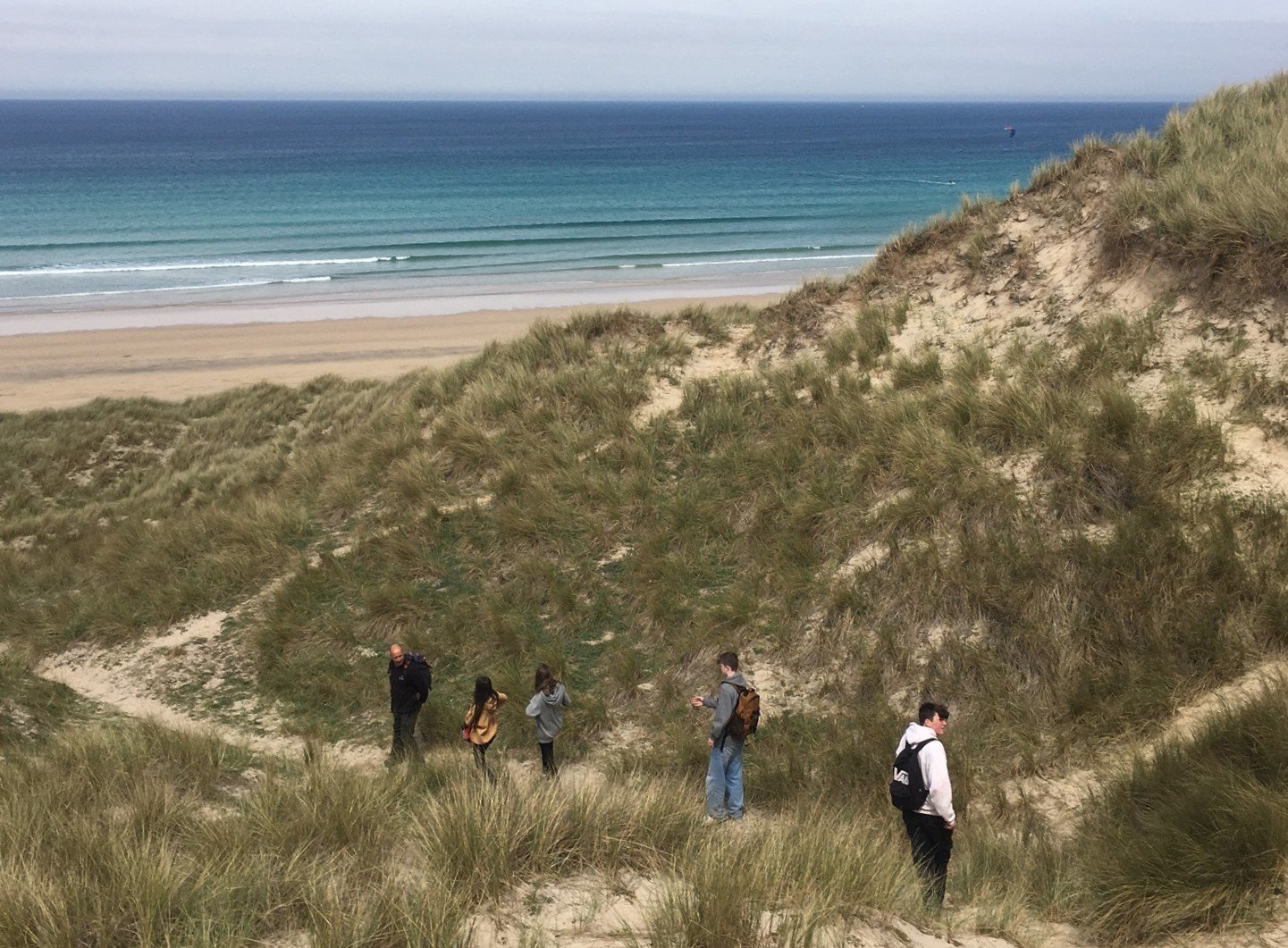
We delivered a series of two workshops and one celebratory presentation event. The initial workshop involved Mac and Dunescapes staff meeting the school students, before heading out to the dunes to record various sounds, as well as visual images (stills and videos) to accompany them, with a set of the school’s iPads. The second workshop involved Mac spending time at the school, supporting the students to work with their recordings to create their own sound art. The students took sounds they had recorded in the dunes and creating MIDI files with them; they then combined these sounds with various instruments to create their own short musical compositions. The final event was a celebration of everyone’s work, held at Cornwall’s archive centre Kresen Kernow, where the completed compositions (and accompanying images) were played to the students and their families, followed by tea and cake!
Who did you work with? / How did you engage with different groups?
Mac Dunlop was a previous recipient of one of our small grants for community art projects. At the time, covid restrictions meant it was difficult to engage with people face to face, so our engagement around his Sand Waves project was mostly online. However, through existing links with Issy Meltzer, Head of Music at Camborne Science and International Academy, an opportunity arose about a year later to work with a group of Year 9 students, who were choosing music as a GCSE subject. We met with Issy and Mac to discuss the idea and came up with a plan. Mac took our plan to Cornish arts funding body FEAST and was successful in gaining most of the funding from them, with some extra money coming from Dynamic Dunescapes. Between Mac’s expertise, Issy’s commitment to her students and our help with planning and organisation, we put our plan into action and worked with a group of 14 budding musicians!
What modifications, if any, did you make to your initial plan and why?
We found an indoor space to use as a plan B, in case the weather was too bad for the outdoor workshop, but fortunately this wasn’t needed. We were fortunate to receive extra support that we hadn’t planned on from one of the Academy’s technicians, Jack Addy, who put in a lot of work into helping the students create the visuals to go with their sound art. This added context to the recordings and made the celebratory event more enjoyable.
Highlight any issues/obstacles & how you overcame them?
There was quite a lot to consider, and lots of communication needed in the planning, with involvement from Mac, Issy, Camborne Academy, FEAST & Kresen Kernow. We also were fortunate to gain permission from staff at St Ives Bay Holiday Park to make use of their site and facilities to access the dunes on our field trip, allowing us to make good use of our limited outdoor workshop time.
How much did the engagement cost?
We were fortunate to gain extra funding from FEAST for this project, so our contribution towards Mac’s fees was a relatively small £250. Kresen Kernow allowed us to use their function room for the celebratory event for free, but we did spend £135 with their associated café, which covered catering costs for all who attended.
Did the engagement work?
Yes, twelve of the original group of fourteen students visited the dunes, recorded various sounds and then created their own dunes-inspired sound art. They then attended the final celebratory event, where they spoke briefly about their artwork before it was played to friends and family.
What could be done differently next time?
If timetabling and funding allowed, it would be good for students to have more time to work on their recordings, as it was all quite a rush to achieve our aims in the time we had.
Media
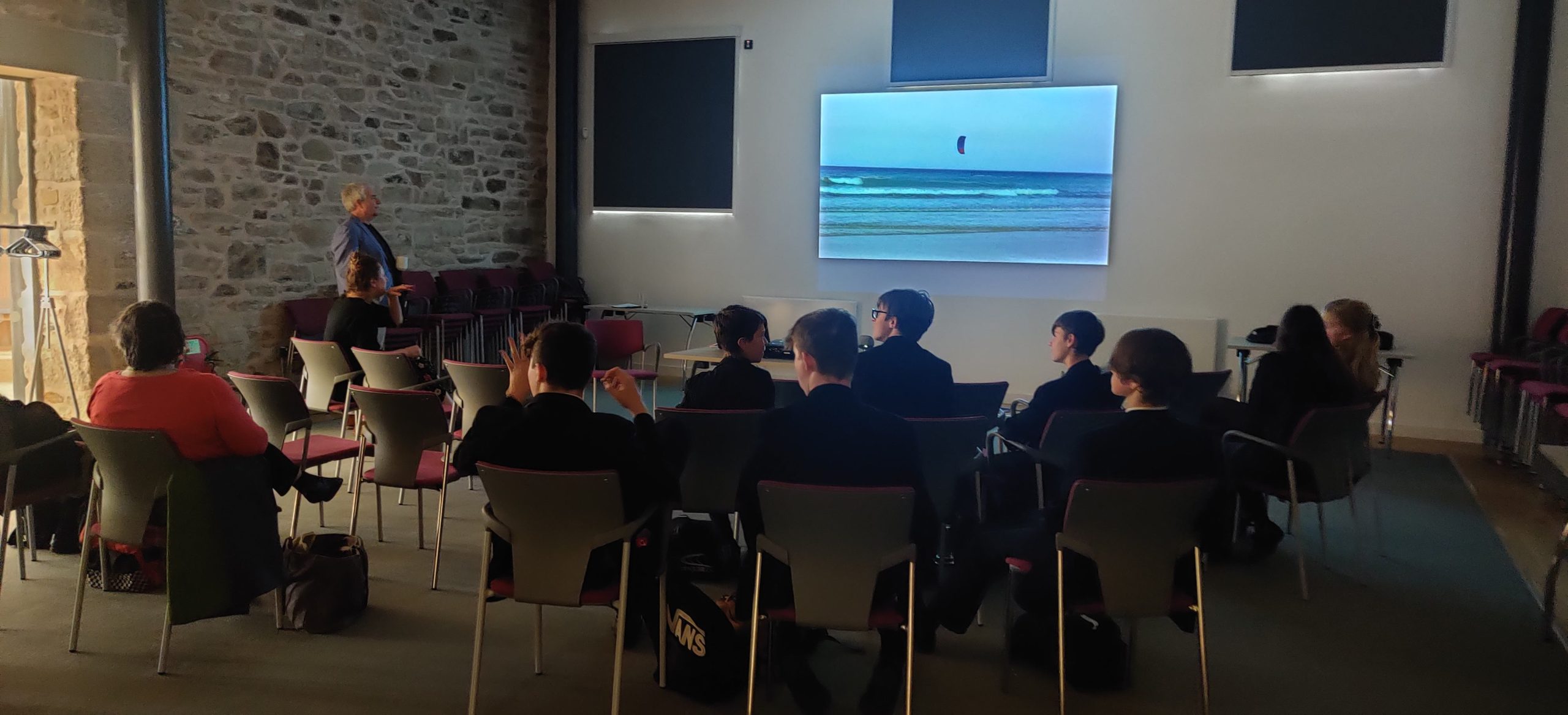
Images: The students preparing for their trip to the dunes and out in the dunes gathering inspiration