


Studland
Down on the historic Dorset coast, we have worked across an area at Studland covering over 230 hectares of dunes and heathland. The dunes in the Studland system have been built up by wind-blown sand over the past 400-500 years and at the northern end of the peninsula, dunes are still growing at a rate of around 1m per year.
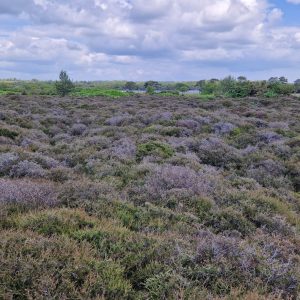
There are four clear dune ridges here and they make this a great site to see how dunes progress over time, a process known as succession: furthest from the beach, the older mature dunes are covered in gorse and birch scrub, heather has flourished creating a beautiful region of dune heather, and younger embryo dunes by the sea at Shell Bay still have bare, shifting sand.
Studland is visited by millions of people every year. It’s often described as a place where time stands still – but when we look at historic maps and photos, we can see that the opposite is true! In fact, much of the wildlife that is unique to Studland depends on the dunes being open, sandy and constantly changing.
The trees, moss and dense scrub that have covered the older dunes have stabilised the sand, changing the habitat so that some of the specialised dune wildlife can no longer live there. During the summer months, we now have a small herd of grazing cattle on the older dunes and heath to keep some of the vegetation low and diverse. This is helping to bring these areas back to the ideal conditions for dune wildlife. These cattle are using an exciting new piece of technology; GPS collars allow us to use virtual fences to manage their grazing, meaning we're able to avoid putting physical fences across the dunes that would restrict public access too.
The beach is often the main attraction but the dunes behind it are a fantastic place to explore. By following one of our 800m trails, you can travel across over 400 years of dune accretion! As the dunes and the peninsula here have grown, a 33 hectare freshwater lake, known as Little Sea, has become separated from the sea. Carp were illegally introduced into the lake and have changed the lake chemistry and habitat, so the project has also worked to reduce their numbers and restore the lake to its former glory.

Work in Dorset is taking place at the beautiful and historic Studland coast, part of the Purbeck Heaths NNR. The project here wass led by National Trust.
Achievements at a glance
The team in Dorset have achieved a lot over the course of the project! You can find out more about these and the project's wider achievements in our Summary Report.

3.63ha of sand dune rejuvenation

3.1ha of wetland rejuvenation

247 events held

17,500 people engaged
Wildlife you might see in Dorset
On sunny days you might see sand lizards or rare smooth snakes sunbathing on patches of sand or bare ground.
Studland is also an important site for many bird species, including the beautiful nightjar, and the brown speckled meadow pipit which can be seen ‘parachuting’ over their nests in the spring.
The dune heath is home to important species of fungus and lichen, including the sand earthtongue fungus which is only found here, and the light green reindeer lichen which forms clusters in shapes similar to reindeer antlers.
As far as insects go, Studland sees plenty of dragonflies during the summer months such as the four-spotted chaser, and is home to the highest density of heath tiger beetle in the UK.


Find out more about Studland
Case Studies
Read some of our case studies about our work in Studland


Blogs
Read some of our blogs about our work in Studland


